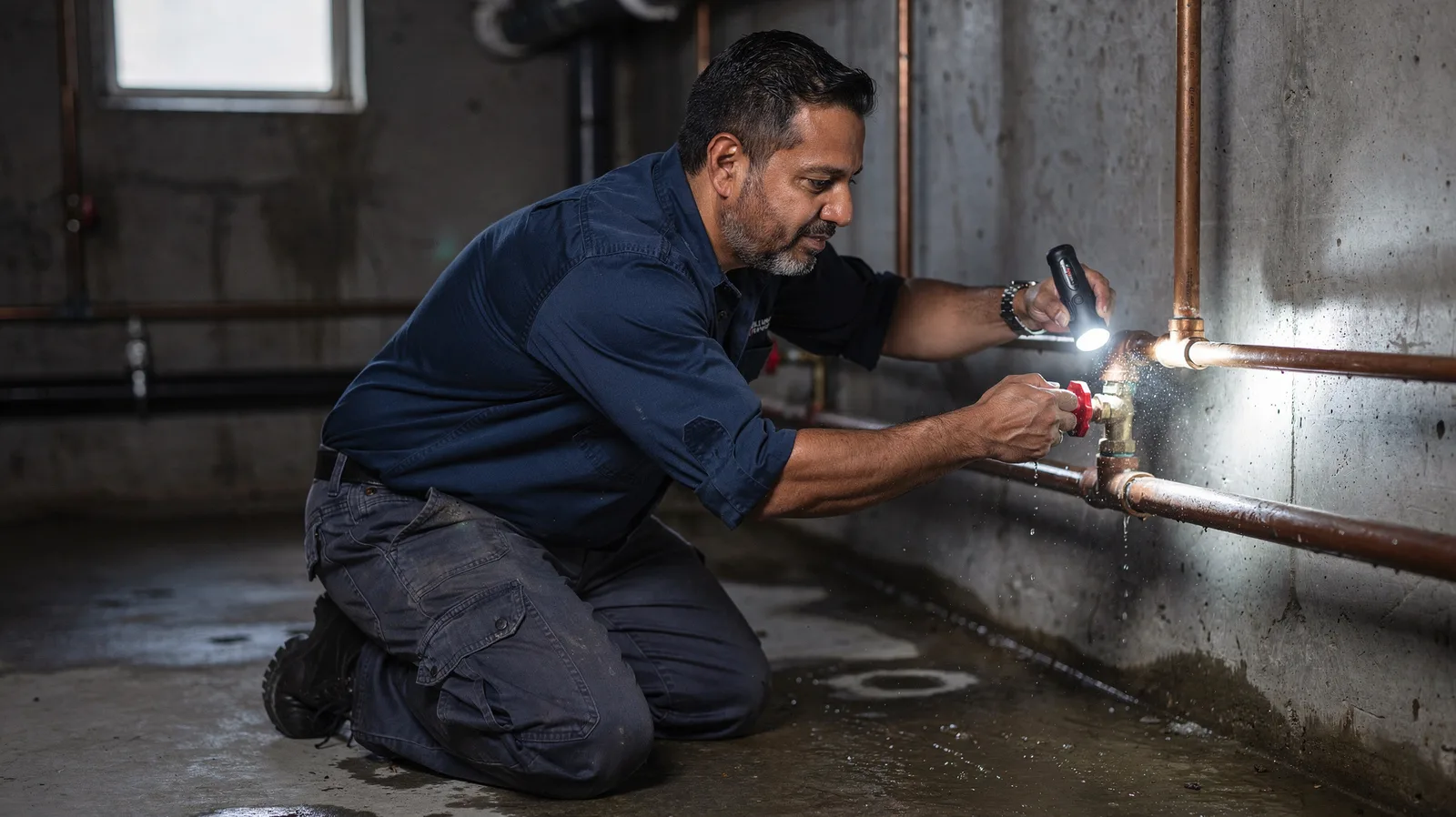
A shut-off valve is the one fitting you need to work during a leak, and the one most people have never turned. Old gate valves seize, snap their stems, or close only part way. Small fixture stops under sinks and behind toilets often drip from the packing the first time they move in years.
If the main will not close
- Do not force it with a long wrench. A brittle stem can break off and leave the valve stuck open.
- Use the curb stop at the meter if you have a curb key, or call the water utility to shut it.
- Well homes: switch off the well pump's breaker to stop pressure.
- Meanwhile, contain the leak with buckets and towels and move belongings.
If a valve leaks after you turn it
Water seeping from the stem nut of an older valve can sometimes be stopped by snugging the packing nut a little. If it keeps dripping, leave it closed and have it replaced.
The repair
A plumber shuts the water at the curb, cuts out the failed valve and installs a full-port quarter-turn ball valve, which closes with a short lever turn and seldom seizes. Fixture stops are swapped for new quarter-turn stops while the water is off. Where the main enters the house on old galvanized or lead pipe, the plumber may recommend replacing a short section so the new valve has sound pipe on both sides.
Once it is done, find each valve, label it, and make sure everyone in the household knows where the main is. In Java, SD, that one habit saves more floors than any repair.