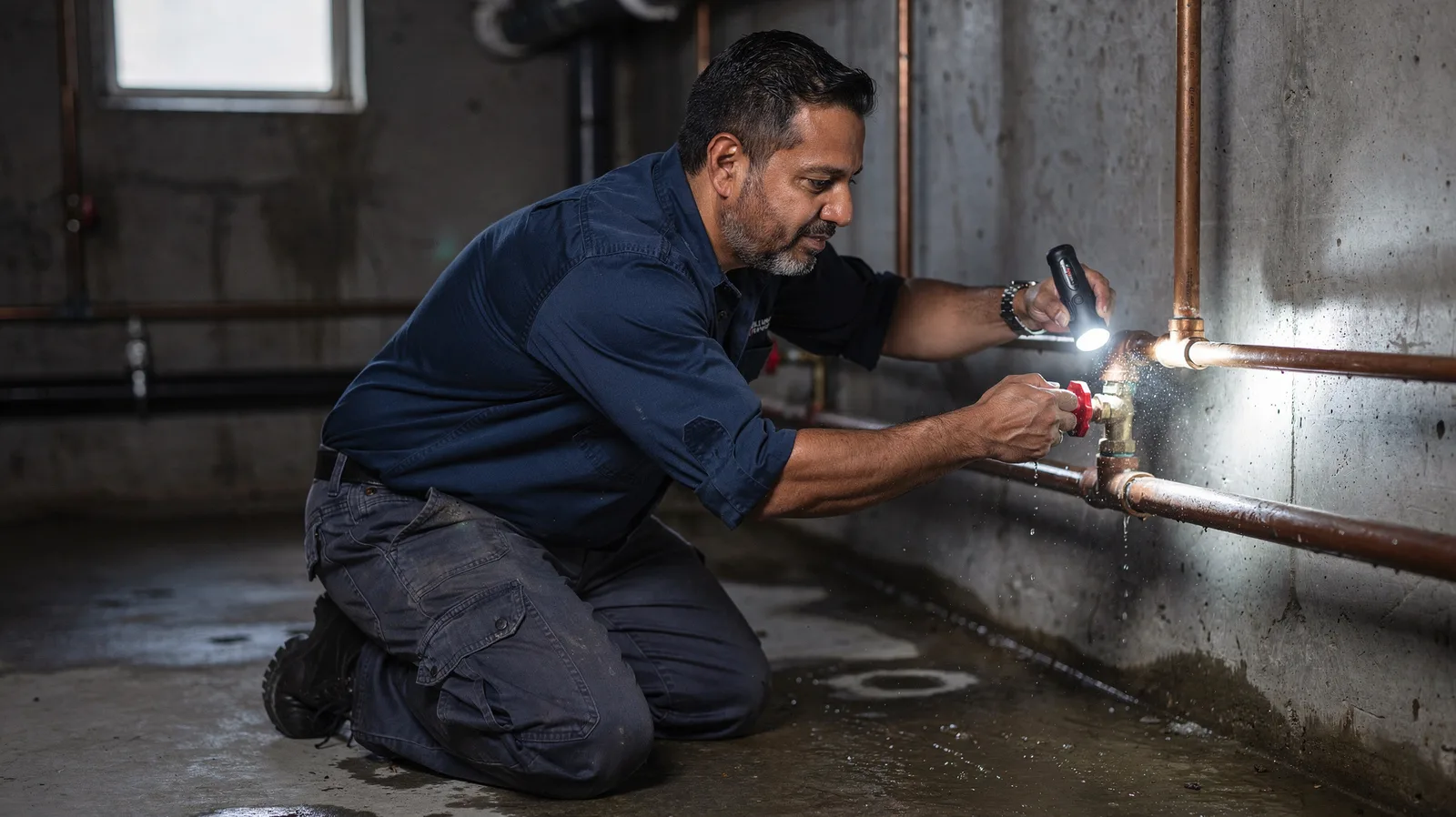
Stop the water before anything else
A split half-inch line at normal house pressure can put out hundreds of gallons an hour, so the first job is the main shut-off. It is usually where the water line enters the house: a basement wall, a utility closet, the garage, or a box near the curb. Turn a round handle clockwise until it stops, or turn a lever a quarter turn so it sits across the pipe.
Then work through this list
- Open the lowest faucet in the house to drain what is left in the pipes.
- If water is near outlets or the electrical panel, do not walk through it. Shut off power only if you can reach the panel standing on a dry floor.
- Turn off a gas water heater's burner (pilot setting) or an electric heater's breaker so the tank does not heat while empty.
- Lift rugs, boxes and electronics off the floor and take photos before you start mopping.
What the repair involves
The plumber opens the wall or ceiling enough to see the break, cuts out the damaged length and splices in new copper or PEX with soldered, crimped or push-fit joints. If the break came from freezing, the rest of that run gets checked, because ice often splits a pipe in more than one place. Once the water is back on, every new joint is watched under pressure for drips.
The price in Java, SD depends mostly on access. A break in an open basement ceiling is a short job; one inside a finished wall or under a cabinet means more cutting, and drywall patching is usually a separate trade. Pipe material matters too: older galvanized lines often need a longer section replaced because the threads around the break are corroded.