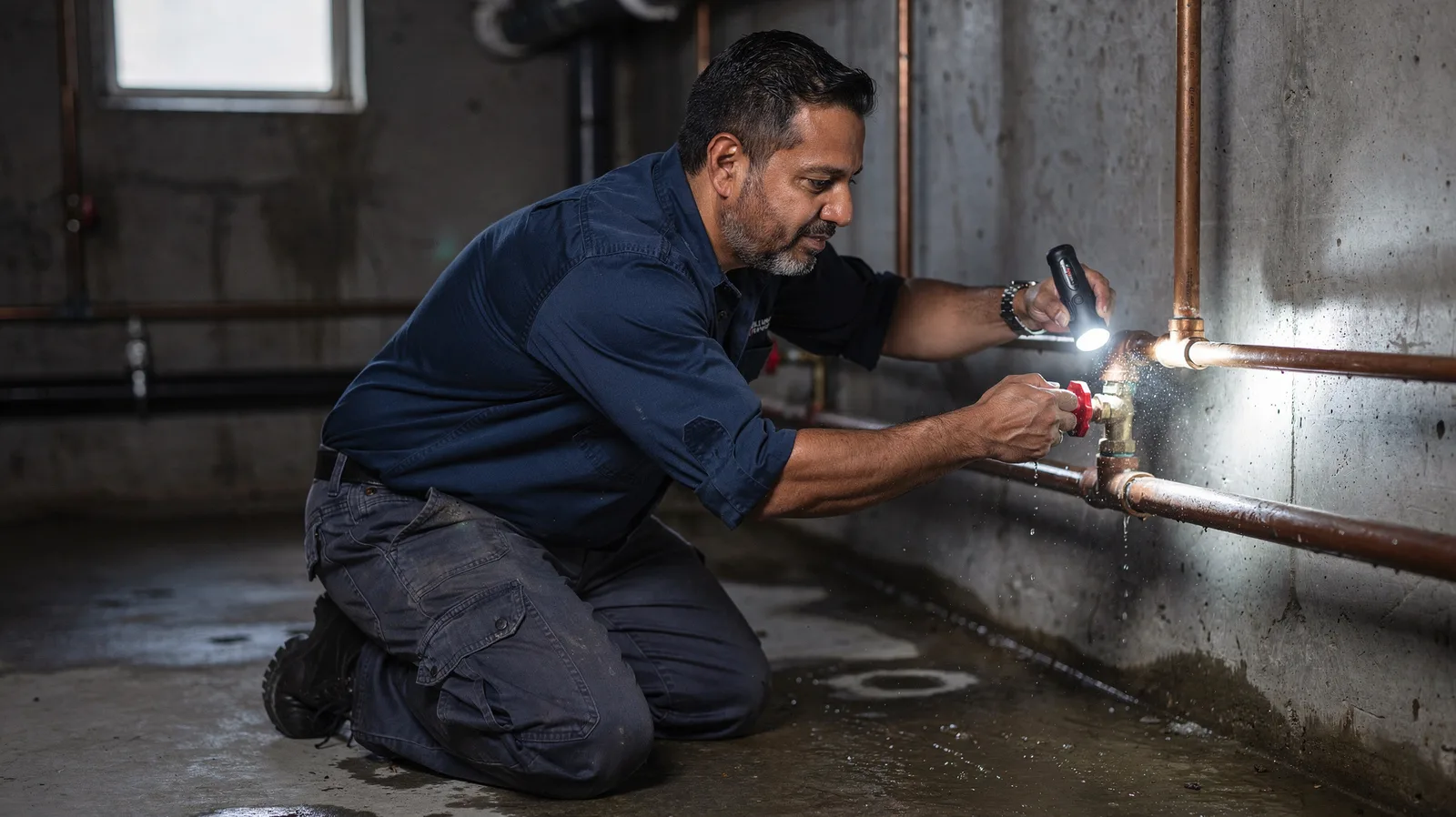
The main water line, often called the service line, carries water from the city meter or your well into the house. When it breaks, the signs are easy to miss at first: a soft wet patch in the lawn that never dries, water bubbling at the curb, pressure that drops off, or a meter dial that keeps spinning with every tap in the house closed.
Confirm it, then shut it down
- Close every fixture and watch the meter's small leak indicator. If it moves, water is escaping somewhere.
- Close the main shut-off inside the house. If the leak is inside, the meter stops. If it keeps moving, the break is in the yard.
- For a yard break, the curb stop near the meter can shut water off to the whole line. Many require a curb key, and some utilities prefer to operate them themselves. Call the water department if you are unsure.
Who owns which part
In most U.S. cities, the utility maintains the main in the street and the meter, and the homeowner owns the service line from there to the house. That varies, so ask your water provider. Some areas in Java, SD are also replacing old lead service lines, and a break may be the moment to find out what yours is made of.
Ways to fix it
A single break is usually excavated and repaired with a coupling. Lines that are old galvanized, lead or thin-wall copper, or that have broken more than once, are often replaced end to end. Trenchless boring can pull a new line under driveways and landscaping with two small pits instead of a long trench. Utility line locates are required before digging.